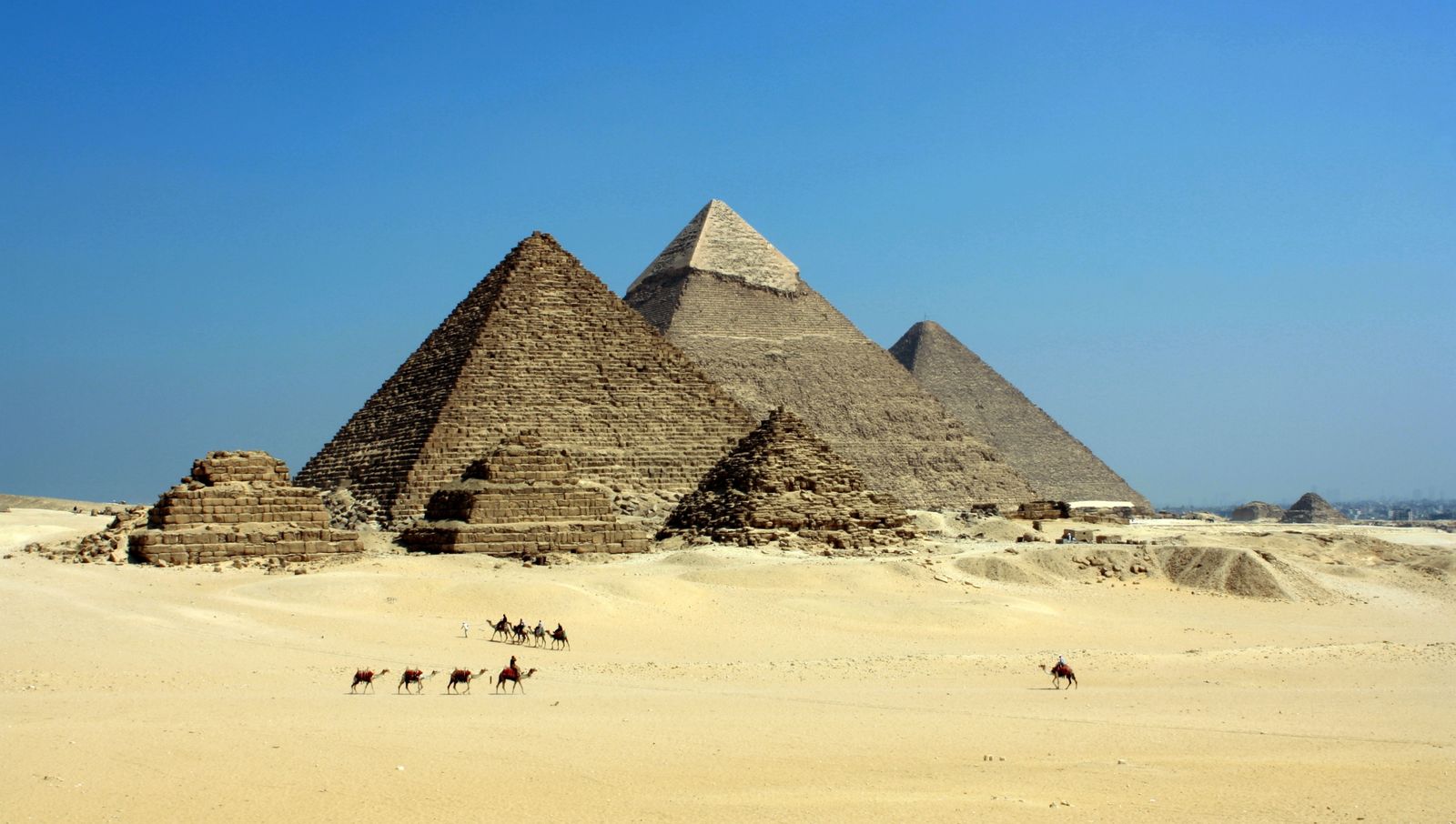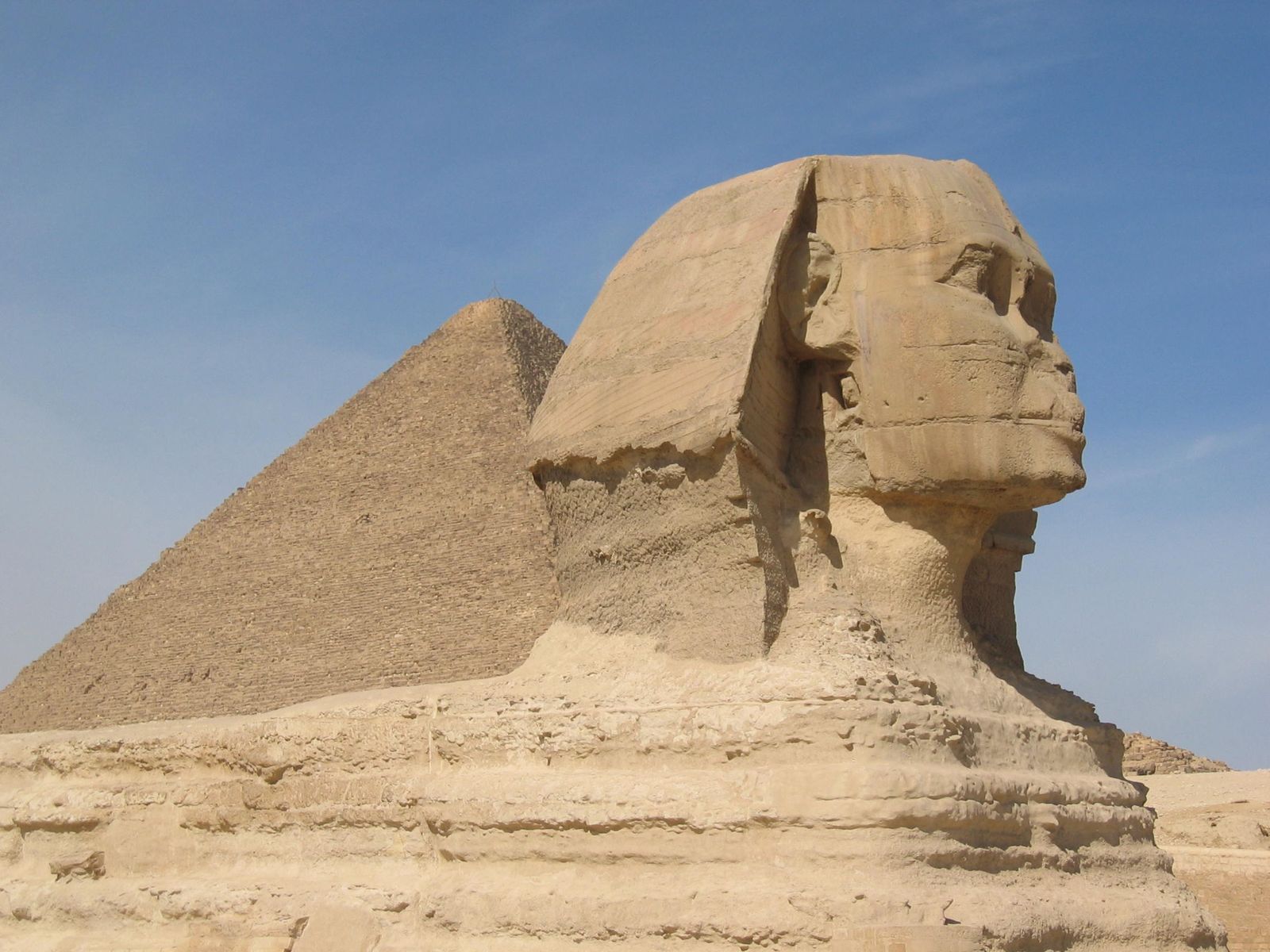
The Giza Plateau
On the desert edge of Greater Cairo rise the Pyramids of Khufu, Khafre, and Menkaure — the only Wonder of the Ancient World still largely intact. Nearby, the Great Sphinx watches the plateau with a calm that has outlasted empires.
Visit early for softer light and thinner crowds. Pair the plateau with the Solar Boat Museum story and a moment looking back at Cairo’s skyline from the sand.
Few places compress this much time into one view. Stand on the plateau’s ridge and the Great Pyramid, the desert, and the rooftops of modern Giza sit almost in the same frame — roughly four and a half thousand years of continuous history telescoped into a single glance.
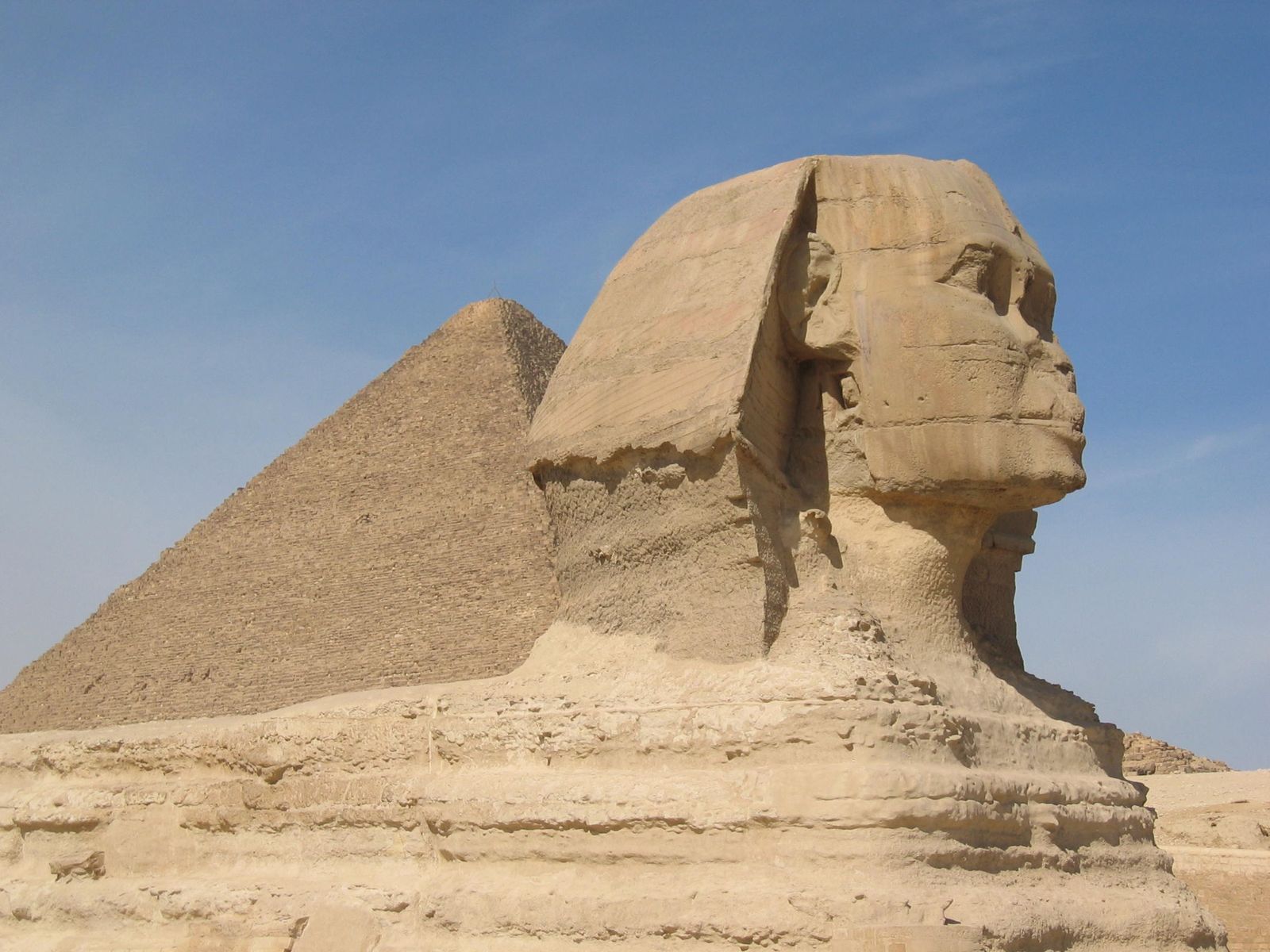
A monument built for eternity
The Great Pyramid was raised for the pharaoh Khufu around 2560 BCE, during Egypt’s Fourth Dynasty, and stood as the tallest man-made structure on Earth for nearly four thousand years. It was conceived not as a tomb alone but as a machine for the afterlife — a stone stairway meant to carry a king from the desert into eternity.
Excavations of the nearby workers’ village have reshaped how historians talk about its builders: not enslaved masses but organized crews of skilled laborers, fed, housed, and rotated in shifts, whose bread ovens, bakeries, and bunk-style dormitories still turn up in the sand. Understanding that context adds real weight to the walk between the three main pyramids.
Museums & treasures
Cairo’s museum landscape is one of the richest on earth. The Egyptian Museum in Tahrir and newer flagship collections gather royal mummies, Tutankhamun’s treasures, and everyday objects that make pharaonic life feel startlingly close.
The Grand Egyptian Museum, rising close to the Giza plateau itself, now anchors much of that legacy under one roof — full Tutankhamun galleries, colossal statuary, and conservation labs visible through glass, all within sight of the pyramids that inspired them.
- Pharaonic sculpture and royal burial finds
- Tutankhamun’s funerary collection highlights
- Coptic Cairo churches and museums
- Islamic Cairo mosques and medieval streets
Beyond the icons: Memphis & Saqqara
Most visitors see only Giza, but the ancient capital of Memphis and the necropolis of Saqqara sit less than an hour south and reward a half-day easily. Saqqara’s Step Pyramid of Djoser predates Giza by decades and marks the moment Egyptians first built in stone at monumental scale — a genuine turning point in architectural history.
Nearby, the open-air museum at Memphis holds a fallen colossus of Ramses II, worth the detour for anyone tracing Egypt’s story chronologically rather than jumping straight to its most famous chapter.
Islamic Cairo & the living city
Beyond the pyramids, Cairo is a city of minarets, Khan el-Khalili’s lanes, Nile bridges at dusk, and coffee that stretches into conversation. Al-Azhar, the Citadel, and Old Cairo reward slow walking and curiosity.
The Citadel of Salah al-Din, with the Mohamed Ali Mosque rising above it, offers one of the best panoramic views in the city — minarets layered against rooftops all the way to the Nile. Below, the medieval core around Al-Muizz Street holds centuries of Mamluk and Ottoman architecture within a few walkable blocks.
Modern Cairo & the Nile at dusk
Cross to Zamalek or the Corniche in the late afternoon and Cairo shows a different face — leafy island streets, riverside cafés, and bridges that fill with foot traffic once the heat breaks. It is a useful counterweight to a day spent among monuments, and a reminder that Cairo is a living capital of more than twenty million people, not only a backdrop for antiquities.
Food & atmosphere
Cairo eats on its own schedule. Koshari — a hearty mix of rice, lentils, pasta, and spiced tomato sauce — is the city’s everyday comfort food, sold everywhere from street counters to sit-down chains. Ful medames and ta’meya (Egyptian falafel) make an easy, inexpensive breakfast, while an evening at a traditional ahwa, or coffeehouse, over mint tea and backgammon is as much a Cairo ritual as any monument.
For something more polished, restaurants along the Nile in Zamalek and Garden City serve grilled fish and slow-cooked classics with river views, and Khan el-Khalili’s café terraces are a good place to pause between shopping for spices, lanterns, and silver.
Practical tips for visiting
- Buy the general Giza site ticket separately from the extra ticket needed to enter inside the Great Pyramid — numbers are limited daily.
- Arrive at opening time to beat both the heat and the tour-bus crowds; last entry times shift seasonally.
- Politely but firmly decline unsolicited camel, horse, or guide offers around the plateau if you haven’t arranged them — prices are negotiable and best fixed before you start.
- Carry a scarf or light layer for mosque visits, where modest dress and covered shoulders are expected.
- Licensed Egyptologist guides add real depth at Giza and inside the museums; hotels and reputable tour desks can arrange them.
How many days & what’s nearby
Two full days cover Giza and a major museum; three to four days let you add Islamic Cairo, Coptic Cairo, Saqqara, and a Nile-side evening without rushing. Many travelers begin here before flying or taking the overnight train south to Luxor.
Alexandria makes an easy day trip on the Mediterranean coast (about 2.5–3 hours each way), and Cairo’s international airport keeps the city a natural first or last stop on almost any Egypt itinerary.
Best time to visit
October through April brings the most comfortable temperatures for walking the plateau and wandering Islamic Cairo on foot. Midsummer (June–August) can be intensely hot at midday, though early mornings and evenings remain workable if you plan around the sun. Spring occasionally brings the khamaseen, a warm, dusty wind — a minor reason to favor autumn and winter for the clearest desert light.